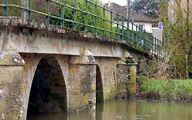
Charles Labelye
1705–1761 · First Westminster Bridge (1750), piers founded in caissons
An engineer and mathematician of Swiss origin, Charles Labelye built the first Westminster Bridge in London, founding its piers in caissons, a technique new to England.
Biography
Born in 1705 in Vevey, into a refugee Huguenot family, Charles Labelye settled in England in the 1720s and taught mathematics there. He won the patronage of great lords, including the Earl of Pembroke, and was naturalised in 1746.
From 1738 to 1750 he built Westminster Bridge over the Thames, then studied the harbours of Great Yarmouth and Sunderland. After the bridge was completed, he left England for France.
Settling in Paris, he became friends with Jean-Rodolphe Perronet. He died there, according to the Historical Dictionary of Switzerland, on 17 December 1761; other sources give a later date.
What he invented or proved
To found the piers in the bed of the Thames, Labelye had large flat-bottomed timber caissons built, filled with masonry and grounded on the dredged riverbed. The sides were then removed: the pier was in place without a cofferdam.
With no piles under the caissons, one pier settled in 1747 and had to be rebuilt. The weakened bridge was replaced in the mid-19th century.
His works
- Westminster Bridge (1738–1750), London: fifteen arches, caisson foundations.
- Studies of the harbours of Great Yarmouth (1747) and Sunderland (1748).
- A Description of Westminster Bridge (1751).
What we owe Charles Labelye
A support founded without scour protection eventually settles: the Westminster lesson applies to every old river bridge. Investigating foundations and monitoring the bed around piers is part of our inspections.
Sources
- Dictionnaire historique de la Suisse, « Labelye, Charles Paul Dangeau de » (P. Bissegger)
- Dictionary of National Biography, « Labelye, Charles » (1892)
- Structurae, fiche « Charles Labelye »
- C. Labelye, « A Description of Westminster Bridge » (1751)
Tester mes connaissances sur les grands bâtisseurs
See also
In our projects
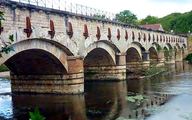
A few structures of the same type studied by THEOREMS.