Harry Bolton Seed
1922–1989 · Geotechnical earthquake engineering; simplified liquefaction method (1971)
A Berkeley professor, Harry Bolton Seed founded geotechnical earthquake engineering and gave the simplified method for assessing soil liquefaction risk.
Biography
Born on 19 August 1922 in Bolton, England, Harry Bolton Seed studied engineering in London, then completed his doctorate at Harvard. From 1950 he taught at the University of California, Berkeley.
He received the US National Medal of Science in 1987 and died on 23 April 1989.
What he invented or proved
After the 1964 Niigata and Alaska earthquakes, in which saturated sandy soils behaved like liquids, Seed studied liquefaction. With Izzat Idriss, in 1971 he proposed a simplified method comparing the cyclic shear stress caused by the earthquake with the soil’s resistance.
He also studied the seismic behaviour of earth dams.
His work
- Simplified liquefaction assessment procedure (1971), with Izzat Idriss.
- Studies of the Lower San Fernando Dam after the 1971 earthquake.
- Rankine Lecture (1979) on the earthquake-resistant design of earth dams.
What we owe Harry Bolton Seed
In seismic areas, liquefaction risk under bridge supports is checked with methods derived from his work, which we apply overseas and in southern France.
Sources
- National Academy of Engineering, « Memorial Tributes : H. Bolton Seed »
- H. B. Seed, I. M. Idriss, « Simplified procedure for evaluating soil liquefaction potential », Journal of the Soil Mechanics and Foundations Division (1971)
- University of California, Berkeley, « In Memoriam : Harry Bolton Seed »
Tester mes connaissances sur les grands bâtisseurs
See also
In our projects
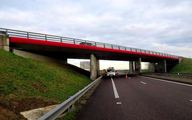
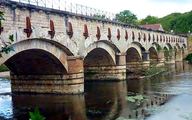
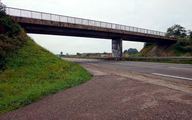
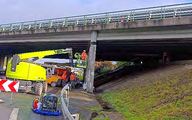
A few structures of the same type studied by THEOREMS.