Osborne Reynolds
1842–1912 · Reynolds number and turbulence (1883); dilatancy of granular soils (1885)
An Irish engineer and physicist, Osborne Reynolds discovered the transition from laminar to turbulent flow, characterised by the number that bears his name, and the dilatancy of granular soils.
Biography
Born on 23 August 1842 in Belfast, Osborne Reynolds first worked in an engineering workshop, then studied mathematics at Cambridge. In 1868 he was appointed to the first chair of engineering at Owens College, Manchester, which he held for thirty-seven years.
A Fellow of the Royal Society, he died on 21 February 1912 at Watchet, Somerset.
What he invented or proved
In 1883, by injecting a dye streak into a pipe, Reynolds showed that flow becomes turbulent beyond a value of a dimensionless number, the Reynolds number. He also founded lubrication theory.
In 1885 he described dilatancy: a dense sand increases in volume when sheared, a key notion in soil mechanics.
His work
- Reynolds experiment on the transition to turbulence (1883).
- On the dilatancy of media composed of rigid particles in contact (1885).
- Lubrication theory (1886).
What we owe Osborne Reynolds
Wind effects on decks, flow around piers, behaviour of sands under foundations: the Reynolds number and dilatancy come into our aerodynamic and geotechnical studies.
Sources
- University of Manchester, « Osborne Reynolds »
- O. Reynolds, « An experimental investigation of the circumstances which determine whether the motion of water shall be direct or sinuous », Philosophical Transactions (1883)
- O. Reynolds, « On the dilatancy of media composed of rigid particles in contact », Philosophical Magazine (1885)
Tester mes connaissances sur les grands bâtisseurs
See also
In our projects
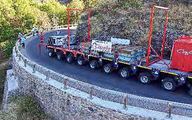
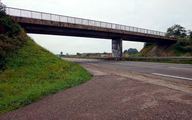
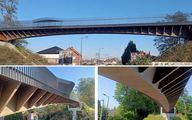
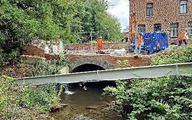
A few structures of the same type studied by THEOREMS.