Paul Séjourné
1851–1939 · Large masonry arches; twin arches of the Adolphe Bridge (1903)
The last great master of stone bridges, Paul Séjourné took the masonry arch to its peak, just as concrete was about to replace it.
Biography
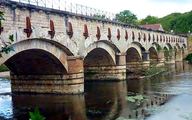
Born in Orléans on 21 December 1851, Paul Séjourné was a graduate of the École polytechnique and a government civil engineer. Posted to the Tarn, in 1883–1884 he built three railway bridges that made his name: the Castelet, Lavaur and Antoinette bridges.
He became the expert on large arches. The Luxembourg government consulted him for a long-span bridge over the Pétrusse: this became the Adolphe Bridge (1900–1903). Then came the Pont des Catalans in Toulouse and, on the Cerdagne line, the Fontpédrouse viaduct (1906–1908).
From 1901 to 1922 he taught the construction of large masonry bridges at the École des ponts et chaussées and gathered his knowledge in “Grandes Voûtes” (Great Arches), six volumes that became a reference. He died in Paris on 19 January 1939.
What he invented or proved
Séjourné renewed the masonry bridge: large arches topped with small arches to lighten the spandrels, timber centring designed as tightly as possible and, at the Adolphe Bridge, a new idea: two separate twin arches, linked by a slab carrying the roadway. Less stone, less centring, a record span.
In “Grandes Voûtes” he also catalogued the world’s most remarkable masonry bridges: an inventory and a method that engineers still consult to understand these structures.
His works
- Castelet, Lavaur and Antoinette bridges, Tarn (1883–1884).
- Adolphe Bridge over the Pétrusse, Luxembourg (1900–1903): an arch of about 85 m.
- Pont des Catalans over the Garonne, Toulouse.
- Fontpédrouse viaduct, known as the Séjourné bridge, Cerdagne line (1906–1908).
- Grandes Voûtes, six volumes.
What we owe Paul Séjourné
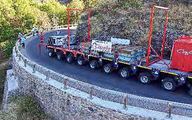
Our load capacity assessments of masonry bridges, particularly for abnormal loads, rest on the same reading of arches as his: line of thrust, crown thickness, the role of spandrels and fill.
Sources
- Structurae, fiches « Paul Séjourné » et « Pont Antoinette »
- Administration des ponts et chaussées du Luxembourg, panneaux « Le pont Adolphe »
- Le Génie civil, 6 novembre 1915 : « Le viaduc de Fontpédrouse »
- DRAC Occitanie, notice de protection du pont des Catalans (2018)
Tester mes connaissances sur les grands bâtisseurs
See also
In our projects
A few structures of the same type studied by THEOREMS.