Bernard Laffaille
1900–1955 · Pioneer of thin ruled-surface shells and suspended roofs (1930s–1950s)
A French engineer, Bernard Laffaille was one of the world’s pioneers of thin concrete shells and ruled surfaces, and of suspended steel roofs.
Biography
Born in 1900, Bernard Laffaille was a graduate of the École centrale. He opened his own design office and devoted himself to thin structures: concrete shells, steel sheet shells, suspended roofs.
He worked notably for the railways, for which he designed engine roundhouses, and with architects on churches and pavilions. He died in 1955.
Several of his projects were completed after his death.
What he invented or proved
In the 1930s Laffaille published a general study of thin ruled surfaces, including the hyperbolic paraboloid, which he was one of the first to build. He also experimented with corrugated steel sheet shells and cable-suspended roofs.
This work paved the way for Candela’s shells and for post-war suspended roofs.
His works
- Memoir on the general study of thin ruled surfaces (1930s).
- Locomotive roundhouses with thin shells for the railways.
- Structure of the church of Notre-Dame de Royan (1958), with the architect Guillaume Gillet.
What we owe Bernard Laffaille
Post-war reconstruction concrete heritage, often thin and exposed, ages and is repaired with suitable techniques: corrosion assessment, concrete repair, protection. We work on this type of structure.
Sources
- Structurae, fiche « Bernard Laffaille »
- Structurae, « Bernard Laffaille, Nicolas Esquillan, two French pioneers »
- Ministère de la Culture, base Mérimée, « Église Notre-Dame de Royan »
Tester mes connaissances sur les grands bâtisseurs
See also
In our projects
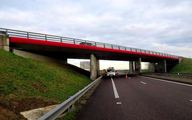
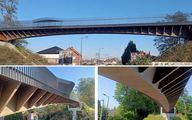
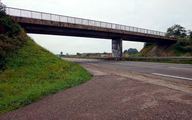
A few structures of the same type studied by THEOREMS.