Arthur Vierendeel
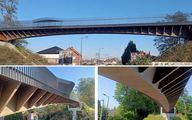
1852–1940 · Vierendeel girder (1896), made of rectangular frames without diagonals
A Belgian engineer and professor, Arthur Vierendeel invented the girder made of rectangular frames without diagonals that bears his name.
Biography
Born on 10 April 1852 in Leuven, Arthur Vierendeel studied at the University of Leuven, then worked in steel construction. Chief engineer of the technical service of the province of West Flanders, he also taught structural stability at the University of Leuven.
He presented his girder in 1896, then built a first bridge with it at Avelgem, over the Scheldt, in 1902. Dozens of structures followed in Belgium and abroad. He died in Uccle on 8 November 1940.
He also wrote a reference course on structural stability.
What he invented or proved
In the Vierendeel girder, the chords are connected by rigidly fixed posts, without diagonals: each panel is a frame that resists through bending of its members. The structure is statically indeterminate and requires very rigid joints, but it leaves the openings clear and appeals through its simplicity.
The system is still widely used in buildings, to span large spaces while letting circulation and services pass through.
His works
- Vierendeel girder (1896).
- Avelgem bridge (1902), over the Scheldt: the first of its type.
- Many bridges over the Albert Canal (1930s).
- Course on structural stability, University of Leuven.
What we owe Arthur Vierendeel
Brittle fracture, weld quality, toughness of old steels: these questions, revealed by the Hasselt accident, are among the checks we carry out on interwar welded steel bridges.
Sources
- Structurae, fiche « Arthur Vierendeel »
- A. Vierendeel, « Cours de stabilité des constructions » (Louvain)
- K.-E. Kurrer, « The History of the Theory of Structures » (Ernst & Sohn, 2008)
Tester mes connaissances sur les grands bâtisseurs
See also
In our projects
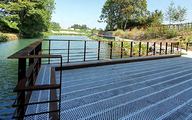
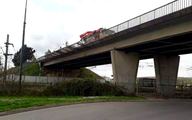
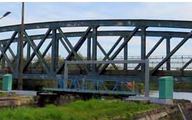
A few structures of the same type studied by THEOREMS.