Gustav Lindenthal
1850–1935 · Hell Gate Bridge (1916), record steel arch; large continuous railway trusses
An Austrian engineer settled in New York, Gustav Lindenthal built the Hell Gate Bridge, the largest steel arch of its time, and trained Othmar Ammann and David Steinman.
Biography
Born on 21 May 1850 in Brünn, now Brno, Moravia, Gustav Lindenthal worked on railways in Austria and Switzerland before emigrating to the United States in 1874. He worked on the Centennial Exposition in Philadelphia, then set up as a consulting engineer in Pittsburgh.
Settling in New York, he was the city’s Commissioner of Bridges in 1902–1903, then designed major railway structures and for decades championed a giant bridge over the Hudson.
He died in Metuchen, New Jersey, on 31 July 1935.
What he invented or proved
Lindenthal designed exceptionally stiff railway structures, able to carry heavy rail loads: the Hell Gate Bridge, a steel arch of almost 300 metres, is so robust that it is said it would last for centuries.
At the Sciotoville Bridge over the Ohio, he built one of the first large continuous truss girders, whose statically indeterminate analysis was then a challenge.
His works
- Smithfield Street Bridge (1883), Pittsburgh: lenticular trusses.
- Queensboro Bridge (1909), New York, a cantilever bridge.
- Hell Gate Bridge (1916), New York: a steel arch of about 298 metres, a world record when it opened.
- Sciotoville Bridge (1917), over the Ohio: a large continuous truss girder.
What we owe Gustav Lindenthal
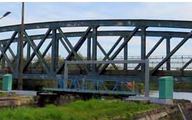
Metal truss railway bridges, continuous or arched, are numerous on old networks. Recalculating them under current loads and examining riveted connections and fatigue are among the assessments we carry out.
Sources
- Structurae, fiche « Gustav Lindenthal »
- American Society of Civil Engineers, « Gustav Lindenthal »
- H. Petroski, « Engineers of Dreams » (Knopf, 1995)
Tester mes connaissances sur les grands bâtisseurs
See also
In our projects
A few structures of the same type studied by THEOREMS.