Buckminster Fuller
1895–1983 · Geodesic dome (1954); tensegrity
An American inventor and architect, Richard Buckminster Fuller popularised the geodesic dome and the notion of tensegrity, two ideas that fed the lightweight structures of the 20th century.
Biography
Born on 12 July 1895 in Milton, Massachusetts, Richard Buckminster Fuller left Harvard without a degree and became an inventor, teacher and design thinker. All his life he sought to “do more with less”.
He taught at Black Mountain College and then Southern Illinois University. He died in Los Angeles on 1 July 1983.
What he invented or proved
In 1954 Fuller patented the geodesic dome: a sphere divided into triangles whose light members share the loads, covering large areas with very little material. He also coined the word “tensegrity” for structures in which compressed bars float within a network of tensioned cables.
Thousands of geodesic domes have been built around the world.
His works
- Geodesic dome patent (1954).
- United States Pavilion at the Montreal World’s Fair (1967), now the Biosphère.
- Dymaxion House (1929–1946), an industrialised dwelling.
What we owe Buckminster Fuller
Covering the most with the least material: a concern we share, now reinforced by the carbon-reduction requirements for structures.
Sources
- Buckminster Fuller Institute, « About Fuller »
- R. B. Fuller, brevet américain 2 682 235, « Building construction » (1954)
- Encyclopædia Britannica, « R. Buckminster Fuller »
Tester mes connaissances sur les grands bâtisseurs
See also
In our projects
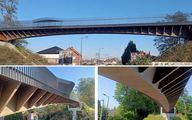
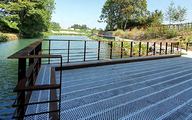
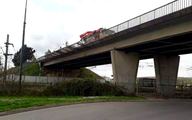
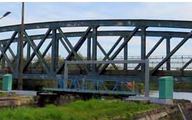
A few structures of the same type studied by THEOREMS.