Robert Le Ricolais
1894–1977 · Three-dimensional space structures (1940); “zero weight, infinite span”
An inventor of forms and structures, Robert Le Ricolais is regarded as the father of space structures, three-dimensional lattices that cover large areas with very little material.
Biography
Born in 1894 in La Roche-sur-Yon, Robert Le Ricolais was largely self-taught, between science, visual arts and poetry. He published on composite sheet metal in 1935, then in 1940 and 1941, in the Annales des ponts et chaussées, his “three-dimensional lattice systems”.
With few commissions in France, he left for the United States in 1951 and taught at the University of Pennsylvania from 1954 to 1975. He died in Paris in 1977.
What he invented or proved
Le Ricolais sought structures of “zero weight and infinite span”: three-dimensional networks of bars and cables in which every element works to the full. He drew inspiration from crystals, soap films and the skeletons of organisms.
His experimental models influenced architects, including Louis Kahn, and space-structure engineers.
His works
- Three-dimensional lattice systems (Annales des ponts et chaussées, 1940–1941).
- APLEX patent and the administrative garage in Yaoundé (1947), Cameroon.
- Research on experimental structures at the University of Pennsylvania (1954–1975).
What we owe Robert Le Ricolais
Making every bar work to the best of its capacity: that is the principle of the trusses we analyse and check on steel bridges and frames.
Sources
- Encyclopædia Universalis, « Le Ricolais Robert (1894-1977) »
- University of Pennsylvania, Architectural Archives, « G. Robert Le Ricolais Papers »
- G.-A. Langlois, « À Yaoundé, la halle APLEX ultime de Robert Le Ricolais » (HAL, 2017)
Tester mes connaissances sur les grands bâtisseurs
See also
In our projects
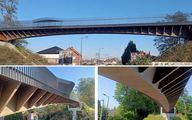
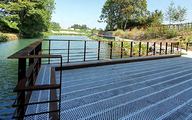
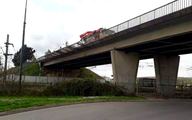
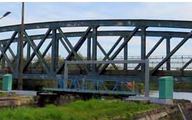
A few structures of the same type studied by THEOREMS.